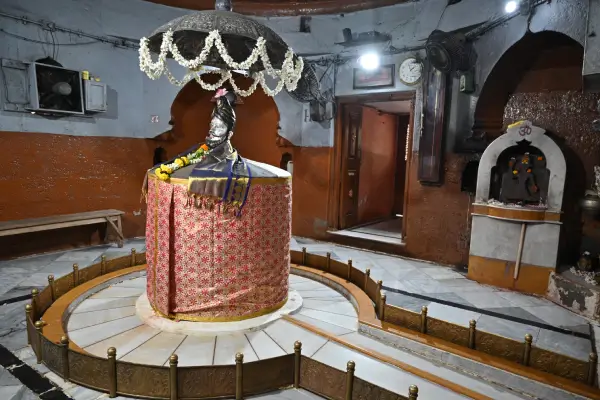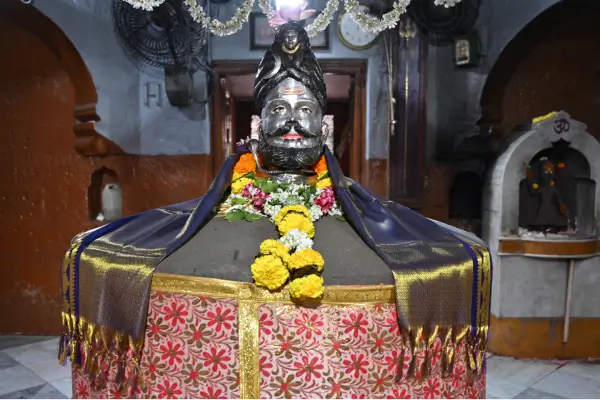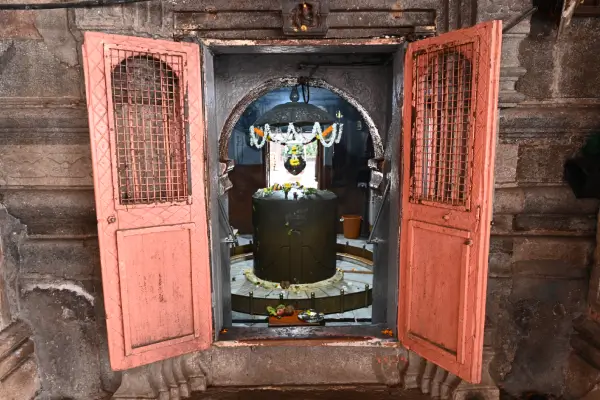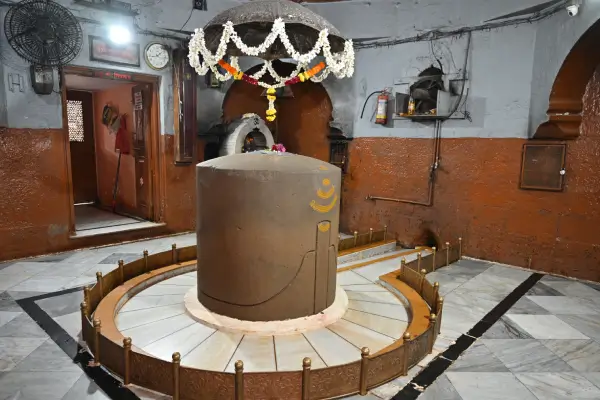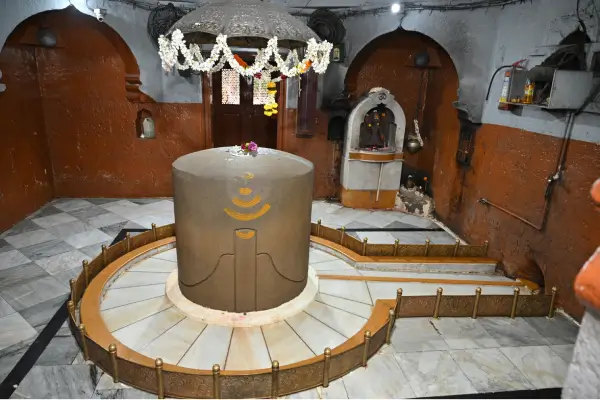
This temple has immense historical significance and is often referred to as the pride and strength of the city. Shri Koupineshwar is also known as the "Gramdevata", which means the "Deity of the City" and people staying in the city as well as in nearby villages have immense faith in the Temple. The Shiva Ling itself is about 4 feet and 3 inches in height, and has a circumference of about 12 feet, making it one of the largest Shiva Lings in the state of Maharashtra. One can experience the positive energy and a sense of serenity as soon as one steps into the Sanctum Sanctorum. The general belief of all devotees, is that sincere prayers offered by all those who visit the Temple, are always answered.
This temple is thus also referred to as a Jagrut Devashtan (a temple where you can feel the Divine presence), where one can come with his/her problems and leave with a sense of calm, a feeling of rejuvenation and positive energy, as the problems and difficulties communicated through the medium of sincere prayer, seem to fade away intuitively, almost indicating a certain divine intervention and thus Devotees continue to return to the Temple, with feeling of even greater faith, in their lord, Shri Koupineshwar.
Repairs and restorations
As per the accounts available, pursuant to the construction of the temple in 1760 or thereabouts, the first major renovation and restoration was carried out sometime in 1879, by the Hindus of the city of Thane and a Sabhamandapa (Main Prayer hall) was constructed. The Temple was subsequently renovated sometime around 1989, and that time the said Prayer hall was provided a Dome which was supported by pillars made out of Yellow Sandstone. Thereafter, the idol of Shri Mahaganapati was installed on left side of the main entrance of the Sanctum Santorum around 1996, and in the year 2009, the idol of Goddess Sarvamangaladevi was installed on the right side of the main entrance.
Over time the said Sabhamandap became dilapidated, and is presently in the process of being re-constructed in a manner, which would complement the Original Temple. The reconstruction is being undertaken by considering the exigencies of our times and after duly accounting for the growing number of devotees and tourists who regularly visit this temple. It is the endeavor of the Temple's Trust, undertaking this activity, to not only ensure that the heritage value of the Temple is protected, but to also ensure that the beauty and grandeur of the Temple gets enhanced.
Local Folklore
Lord Shiva as per Hindu belief is known to be the lord of destruction. As per local folklore the Shiva Ling grows every year equivalent to the size of a grain of sand. It is believed that sometime in the distant future when this Shiva Ling actually touches the roof of the Sanctum Sanctorum, there would be a flood of epic proportions (Pralay), and the world as we know it, shall come to an end.
Folklores aside, the thing that can be said with degree of certainty, is that any person who visits the temple, leaves with sense of positivity and calm as if all his/her worries have been washed away, by divine intervention.
Events & Festivals
Mahashivaratra
On this auspicious day, Lakhs of devotees come to offer their prayers to Lord Shri Koupineshwar and special care is taken and all necessary arrangements are made to ensure that the festivities and celebrations are conducted with positive vibes and in a disciplined manner. All the necessary steps are undertaken, to ensure that all the devotees can worship Shri Koupineshwar Maharaj without any untoward incidence. The Laghurudra is arranged by the Temple Trust in the morning on Mahashivratri. The next day the palanquin (Palkhi) of lord Shri Koupineshwar leaves for a procession around the city, known as Nagar Pradakshina. On the night of the "No moon day (Amavasya)" the Gurav of the temple organizes Kirtans by the Varkari Sampradaya.
Maharudrabhishek
Every year in the Adhik or Vaishakh month, Maharudrabhishek is performed. At that time, almost 40 to 50 Bramhavrunda are present, for reciting Rudra.
Sacred Spaces & Moments